
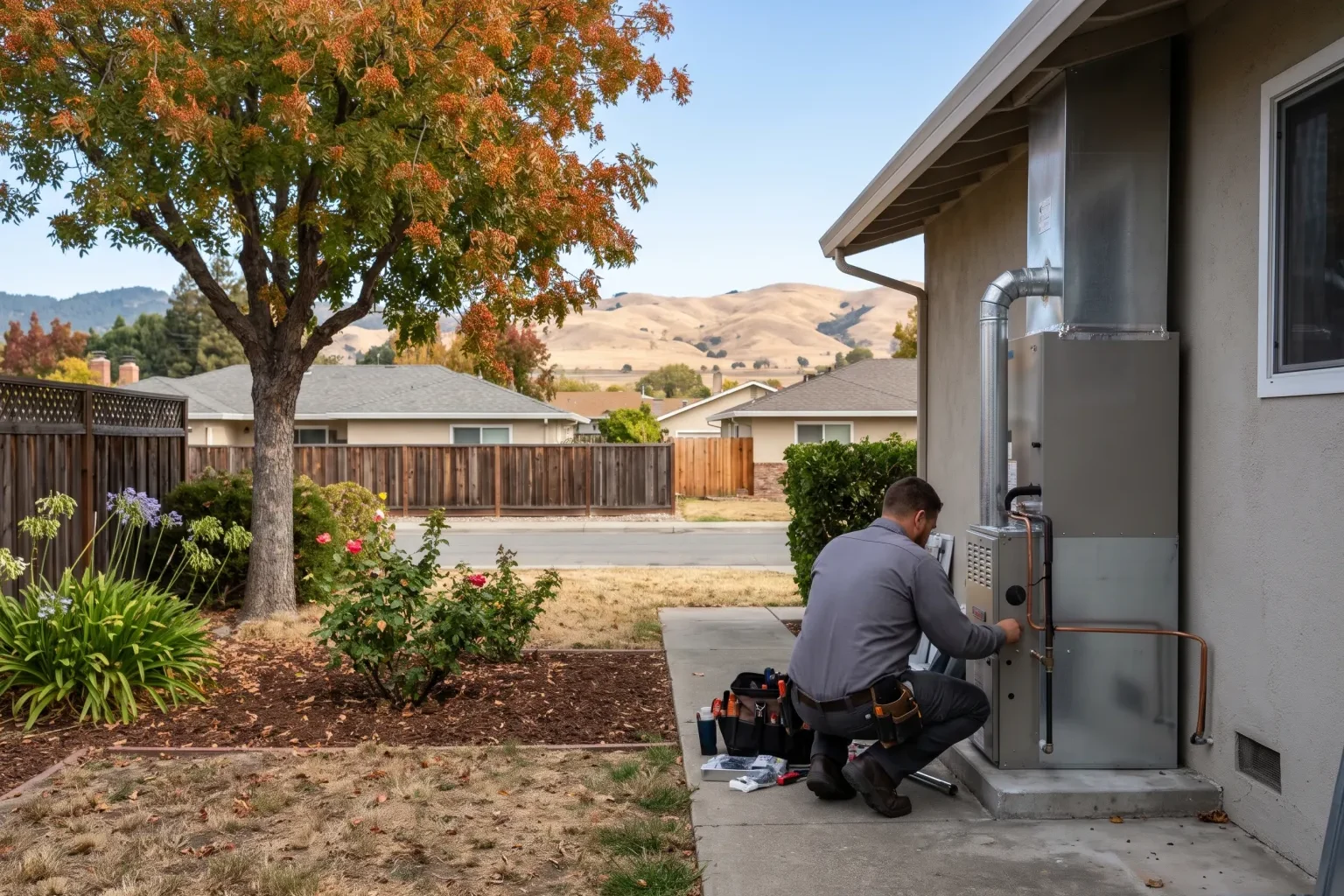
The short answer
A new furnace makes sense when the old one is failing repeatedly, unsafe, or badly undersized or oversized for the home. We measure the heating load, inspect venting, gas and ducts, explain how the Bay Area Air District rule for furnaces made from 2029 affects your choice, and install and commission the system.
Replacing a furnace is a decision most households make only a few times, and in the Bay Area it now comes with a regulatory twist. ReliableAir HVAC Services installs new gas furnaces across San Jose and neighboring cities, and we also help owners weigh a heat pump when it fits the house better. Our job is to size the equipment to your home, connect it safely to gas, venting, electrical and ductwork, and leave you with a system that runs quietly through the damp months between November and March. This page covers when a new furnace is worth considering, what our installer inspects first, how the Air District's furnace rule affects timing, what determines project scope, and what to expect from the first visit through startup.
Clues that your furnace is near the end
Furnaces rarely quit without warning. In San Jose the heating season is short and mild, so a unit can limp along for years, but the warning signs tend to stack up. Watch for these:
- You have called for repairs more than once in the last couple of heating seasons
- The heat exchanger shows cracks, rust-through or scorch marks during an inspection
- Rooms at the far end of the house never reach the thermostat setting
- The burner flame looks lazy or yellow instead of crisp and blue
- Your gas bill climbs each winter even though your habits have not changed
- You hear booming at ignition, rattling panels or a blower that strains to start
- Replacement parts for your model are hard to find or take weeks to arrive
What our installer inspects before recommending a model
Bigger is not better with furnaces. An oversized unit heats the house in short bursts, cycles on and off, and wears out its igniter and controls early. We run a heating load calculation based on your square footage, insulation, window area and orientation, so the recommendation reflects how your house actually behaves rather than the label on the old unit.
Next we look at everything the furnace connects to. Venting gets particular attention: a high-efficiency condensing furnace vents through plastic pipe and needs a condensate drain, while a standard-efficiency furnace uses a metal flue that must draft correctly. We check the gas line size and shutoff, the electrical supply, the return air path and the condition of the ductwork. Many San Jose homes from the 1950s through the 1970s have ducts in the attic or crawlspace with loose joints and tired insulation, and sealing those can matter as much as the furnace itself.
We also confirm clearances in the closet, attic or garage where the unit sits, along with combustion air supply, seismic strapping where required, and any filter rack changes.
Repair, replace like-for-like, or switch to a heat pump
If your furnace has a failed igniter, flame sensor, inducer motor or control board on an otherwise sound cabinet, repair is usually the sensible move, and we will say so. The Bay Area Air District rules do not require you to replace working equipment; they apply only when an existing furnace fails or is replaced.
When replacement is on the table, timing matters. Under Air District Rule 9-4, natural gas furnaces manufactured from 2029 must meet a zero-NOx emission standard, which in practice points homeowners toward heat pumps for replacements after that date. Installing a new gas furnace today is still an option, and for some homes it is the most practical one. For others, especially homes that also need new central air, a heat pump that heats and cools in one system is worth pricing alongside the furnace. We will quote both when it makes sense so you can compare.
Factors that drive the scope of a furnace install
Every proposal we write is specific to the home, and these are the items that move it up or down. Efficiency level is a big one: a condensing furnace costs more up front and needs new venting, while a standard model may reuse an existing flue if it is in good shape. Variable-speed blowers and two-stage burners add comfort and quieter operation at a higher equipment cost.
Location matters too. Swapping a furnace in an open garage is simpler than working in a tight attic or an interior closet. Duct repairs or replacement, a new return, gas line upsizing, electrical changes, thermostat upgrades, permit fees from your city and haul-away of the old unit can all be part of the job. Your written estimate lists each item so nothing is hidden in a single line.
Living with a new furnace in a South Bay climate
The Santa Clara Valley has dry summers and mild, damp winters, so a furnace here may run only a few months a year. That short season shapes what is worth paying for. A two-stage burner, for example, spends most of its time on low fire during cool San Jose nights, which keeps temperatures steady and cuts the blast of hot air that single-stage units are known for. Homes further inland and to the south of the valley see colder mornings than neighborhoods near the Bay, and we factor that into sizing.
Because the furnace blower also moves air for central cooling, the blower and coil match matters if you have or plan to add air conditioning. We check that the new furnace's airflow suits your existing or future AC coil so both seasons work well.
From first visit to the first warm night
The process starts with an in-home consultation where we measure, inspect and ask how the house feels in winter. You receive a written proposal with one or more equipment options and the work each involves. Once you choose, we schedule the installation and handle the permit.
On install day our crew lays down floor protection, shuts off gas and power, and removes the old furnace. The new unit is set, leveled and connected to gas, venting, electrical, ductwork and the condensate drain where needed. We then fire the furnace, measure gas pressure and temperature rise, check for gas leaks and verify safe venting. A combustion check and a walkthrough with you finish the day. We explain filter size and replacement intervals and how to read your new thermostat. Finally, the city inspection closes out the permit, and we coordinate that appointment with you.