
The short answer
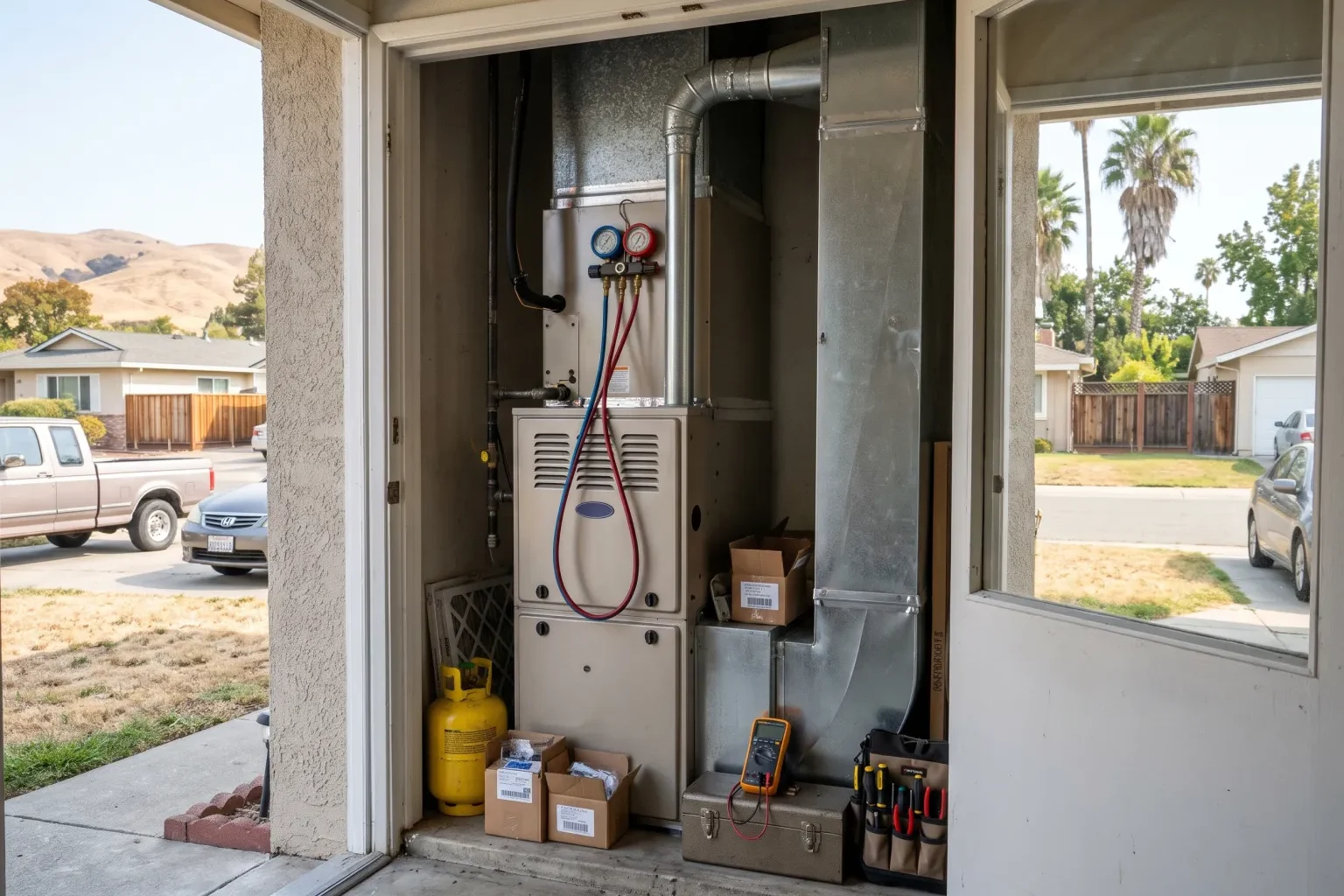
Book heating repair when the house will not warm up, the system runs constantly, makes new noises, or shows error codes. We identify your equipment type, test the specific parts that fail on it, explain the cause and the repair price, and fix it after you approve.
Heating trouble in the South Bay rarely looks like a frozen pipe emergency, but a cold house on a damp January morning is still miserable, especially with kids, older relatives or someone working from home. ReliableAir HVAC Services repairs the full range of residential heating equipment found around San Jose: gas furnaces, ducted heat pumps, ductless mini-splits, wall furnaces and the thermostats and ducts that tie them together. Because the equipment varies so much from one house to the next, we start every call by figuring out what kind of system you have and how it is supposed to work, then track down why it is not. This page walks through the warning signs, the checks we run on each type of system, how we frame the fix-or-replace choice, and what a repair appointment looks like.
Is your heater asking for help?
The signs differ a little between a gas system and an electric heat pump, but most fall into a few groups. Comfort problems include rooms that stay cold, a thermostat that never reaches its setting, or heat that feels weak. Behavior problems include constant running, frequent on-off cycling, or a system that will not start at all.
Then there are the sensory clues. Burning smells that linger, a sharp electrical odor, banging, buzzing or screeching are worth a call. On a heat pump, a thick layer of ice that does not clear after a defrost cycle, or an outdoor fan that stops while the compressor hums, points to a fault. A wall furnace with a pilot that keeps going out is another frequent request in older San Jose homes.
Checks we run for each type of system
Different equipment fails in different ways, so our diagnosis follows the system you actually own.
- Gas furnaces: igniter, flame sensor, gas valve, inducer motor, pressure switch, limit switches, blower, heat exchanger and venting
- Heat pumps: reversing valve, defrost board and sensors, refrigerant charge and leaks, capacitors, contactor, outdoor fan and backup heat strips
- Ductless mini-splits: indoor coil and blower wheel, sensors, drain line, communication wiring and outdoor inverter board
- Wall and floor furnaces: pilot assembly, thermocouple, gas control valve and vent connection
- Thermostats: wiring, batteries, settings, compatibility and placement away from drafts or sunny windows
- Ductwork: disconnected or crushed runs, leaks in attics and crawlspaces, blocked returns and closed dampers
How we approach repair versus replacement
Our default is to repair what can be repaired. A heating system that has one failed part and is otherwise in good condition rarely needs to be replaced, and swapping out a capacitor, a sensor or a motor is usually the practical answer.
We raise replacement only when the evidence supports it: a cracked heat exchanger on a furnace, a failed compressor on an older heat pump, a refrigerant that is no longer practical to service, or a pattern of breakdowns that keeps getting more frequent. Even then, the choice is yours. The Bay Area Air District appliance rules do not require replacing working equipment; they apply only when a furnace or water heater fails or is replaced. If you do replace a gas furnace, it helps to know that under Rule 9-4, natural gas furnaces manufactured from 2029 must meet a zero-NOx standard, which in practice points toward heat pumps after that date. We can explain how that timeline affects your options.
Why repair costs vary from home to home
We quote the repair after the diagnosis and before starting work. The figure reflects the part, how readily it is available locally, and the labor to reach and replace it. A blower motor in a garage furnace is a different job from a reversing valve on a heat pump, which requires recovering and recharging refrigerant.
Access plays a role, from easy closet installs to attics and crawlspaces. So does whether we find related damage, such as a burned wire at a contactor or a duct that came loose. If several issues turn up, we rank them by urgency so you can handle safety items now and plan the rest.
A typical repair appointment
When you reach out, we ask what the system is doing, what type of heater you have if you know, and whether there are error codes or unusual smells. If you smell gas, leave the house and contact your gas utility first.
At the house, the technician listens to your description, looks at the thermostat, and then examines the equipment itself. Once the cause is found, you get a clear explanation and a price. With your approval, the repair is done on the spot when parts are on hand, or scheduled promptly when a part must be ordered.
We finish by running the system through full heating cycles, checking supply air temperature and safety controls, and confirming the thermostat responds correctly. You will know what failed, what we replaced, and whether anything else should be watched.
Keeping heat reliable between visits
A few habits reduce the chance of another breakdown. Change or clean filters regularly, keep supply and return grilles open and unblocked by furniture, and keep shrubs and debris at least a couple of feet from an outdoor heat pump. Schedule a tune-up before the heating season so small issues like a weak capacitor or a dirty flame sensor get handled while the weather is still dry and warm.
Pay attention to early signals as well. If the system takes noticeably longer to warm the house, starts cycling more often, or a new sound appears, booking a visit then is usually simpler than waiting until it stops entirely on a cold, rainy night. Older homes around San Jose often have return ducts in crawlspaces that loosen over time; a quick look each fall for disconnected sections or torn insulation can prevent weak airflow and a dusty smell when the heat first kicks on.
Heating Repair by city
- Heating Repair in Santa Clara
- Heating Repair in Milpitas
- Heating Repair in Sunnyvale
- Heating Repair in Fremont
- Heating Repair in Mountain View
- Heating Repair in Newark
- Heating Repair in Cupertino
- Heating Repair in Los Altos
- Heating Repair in Campbell
- Heating Repair in Saratoga
- Heating Repair in Palo Alto
- Heating Repair in Los Altos Hills